
Should Boulder homeowners choose luxury vinyl plank or hardwood flooring — and which one actually holds up better in Colorado’s climate?
Both options offer beautiful aesthetics and long-term durability, but they perform very differently in Boulder’s conditions. Hardwood brings authentic natural beauty and proven longevity, but it struggles with Colorado’s low humidity, temperature swings, and moisture from an active outdoor lifestyle. LVP is dimensionally stable, fully waterproof, and lower maintenance — making it the more practical choice for most Boulder homes, even if it doesn’t develop the same natural character over time.
Appearance and Aesthetics
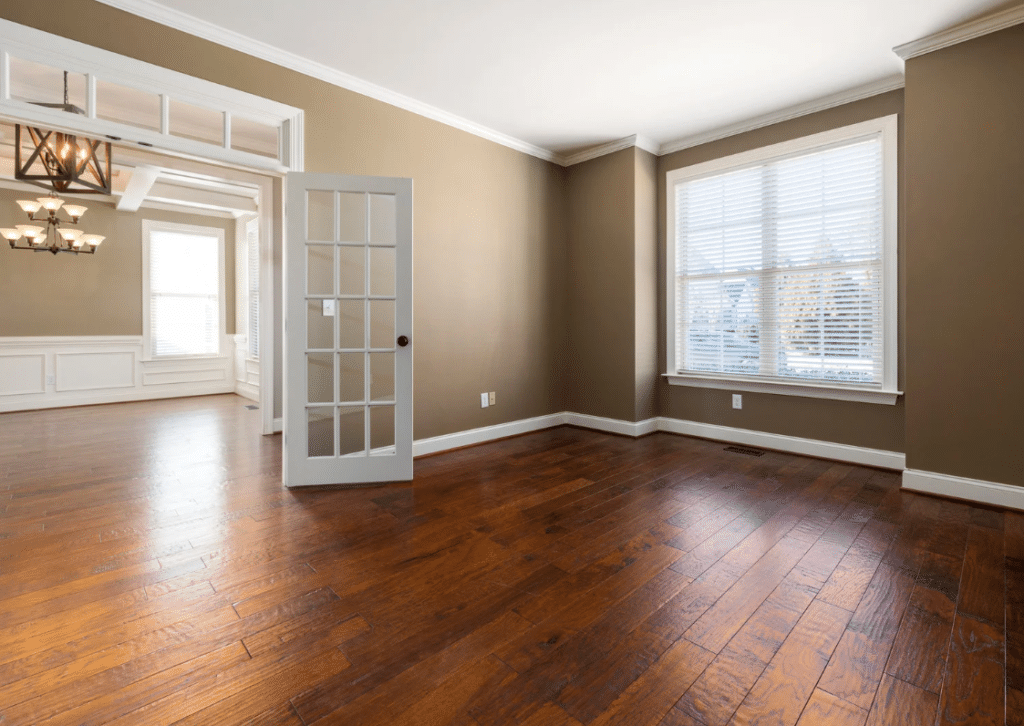
Hardwood flooring brings authentic natural beauty that many homeowners cherish. Each plank features unique grain patterns, color variations, and characteristics that make every floor one of a kind. The depth and richness of real wood creates warmth and elegance that’s difficult to replicate.
Modern luxury vinyl plank technology, however, has closed the appearance gap significantly. High-definition printing captures real wood grain patterns with remarkable accuracy. Embossed texturing aligns with printed grain, creating visual and tactile realism that often fools even experienced eyes. Many Boulder visitors can’t distinguish quality LVP from genuine hardwood without close inspection.
The difference becomes more apparent with wear over time. Hardwood develops a patina and character marks that some homeowners appreciate as adding authenticity. Scratches and dents become part of the floor’s story. LVP maintains its original appearance longer through its protective wear layer but doesn’t develop the same natural aging character.
LVP vs Hardwood in Boulder CO: Climate Performance
Boulder’s climate creates significant challenges for hardwood flooring. The low humidity causes wood to contract, creating gaps between boards. Seasonal humidity variations, though minor compared to other regions, still cause ongoing expansion and contraction cycles that stress hardwood floors.
LVP vs hardwood in Boulder CO comparison strongly favors LVP for climate compatibility. Luxury vinyl’s engineered construction remains dimensionally stable regardless of humidity levels. The rigid core doesn’t absorb or release moisture, eliminating the expansion and contraction that affects hardwood. This stability means consistent appearance and performance year-round.
Temperature fluctuations also impact hardwood more than LVP. Boulder’s dramatic daily temperature swings cause hardwood to expand and contract continuously.
Moisture Resistance
Water exposure represents one of hardwood’s primary vulnerabilities. Spills that aren’t cleaned immediately can penetrate wood, causing staining, warping, or permanent damage. Boulder’s snowy winters mean wet boots frequently deposit moisture near entryways. Spring mud season and summer rainstorms create additional moisture exposure.
LVP offers complete waterproof protection, a significant advantage for Boulder homes. The rigid core doesn’t absorb water, and properly installed floors protect subfloors from moisture damage. This makes LVP practical for areas where hardwood would be risky, including basements, kitchens, and near entryways.
Pet owners particularly appreciate LVP’s waterproof properties. Accidents happen, but quick cleanup prevents permanent damage. The same accidents can destroy hardwood floors, requiring expensive repairs or replacement.
Durability and Maintenance
Hardwood’s durability is proven through centuries of use, with many antique floors still beautiful today. However, hardwood is susceptible to scratches, dents, and wear from daily life. Active Boulder households with pets, children, and outdoor gear track in dirt and debris that gradually wear hardwood surfaces.
LVP’s wear layer provides exceptional scratch and dent resistance. The protective coating handles pet claws, dropped objects, and heavy traffic without showing damage. This durability suits Boulder’s active lifestyle, where hiking boots, ski equipment, and mountain bikes come and go frequently.
Maintenance requirements differ significantly. Hardwood needs regular sweeping, specialized cleaning products, and periodic refinishing to maintain appearance. Refinishing typically occurs every 7 to 10 years, requiring professional service and temporarily vacating the space.
LVP requires only basic sweeping and occasional damp mopping. No refinishing, special treatments, or intensive care is necessary. The wear layer maintains its protection throughout the floor’s lifespan, typically 15 to 25 years. This lower maintenance burden appeals to busy Boulder residents who’d rather spend time outdoors than caring for floors.
Installation Considerations
Hardwood installation is more complex and time-consuming than LVP. The wood must acclimate to your home’s conditions for several days before installation. Installation involves nailing or stapling planks to the subfloor, requiring specialized equipment and expertise. Sanding and finishing add additional time if you’re using unfinished hardwood.
LVP installation is straightforward, especially with click-lock systems. Planks float over the subfloor without glue or nails in most applications. This allows for faster installation and the ability to install over many existing floors, saving removal costs.
Boulder’s altitude and climate require careful hardwood installation practices. Proper spacing, moisture barriers, and acclimation time become even more critical than in other climates. LVP is more forgiving, with installation procedures remaining standard regardless of location.
Environmental Considerations
Hardwood comes from renewable resources, though sustainability depends on forestry practices. Look for FSC-certified wood from responsibly managed forests. Hardwood can be refinished multiple times, extending its useful life significantly. At end of life, it’s biodegradable.
LVP is manufactured from synthetic materials, primarily PVC. Production has environmental impacts, and the material isn’t biodegradable. However, some manufacturers incorporate recycled content and have developed more sustainable production processes. LVP’s long lifespan and lack of refinishing needs somewhat offset initial production impacts.
Comfort and Sound
Hardwood provides firm support that some people prefer, while others find it hard on feet and joints. Sound travels easily through hardwood, which can be loud in multi-story homes. Area rugs help dampen sound and add comfort.
LVP offers slight cushioning, particularly WPC products with cork or foam backing. This makes LVP more comfortable for extended standing and gentler on dropped items. Sound transmission is also reduced compared to hardwood, creating quieter spaces.
Radiant Heat Compatibility
Both materials work with radiant floor heating, though with different considerations. Hardwood requires careful temperature control to prevent damage from excessive heat or rapid temperature changes. Only certain species and installation methods are suitable.
LVP typically performs better with radiant heat. The stable core materials conduct heat effectively while resisting damage from temperature changes. Installation over radiant systems is straightforward, and temperature restrictions are less stringent.
Making Your Decision
Choosing between LVP vs hardwood in Boulder CO depends on your priorities. If authentic wood character and maximum resale value matter most, and you’re willing to invest in higher initial costs and ongoing maintenance, hardwood may be your best choice.
If climate compatibility, waterproof performance, durability, lower cost, and minimal maintenance align better with your lifestyle and priorities, LVP offers compelling advantages. For many Boulder homeowners, LVP’s practical benefits and impressive aesthetics make it the smart choice for modern Colorado living.
FAQ
How does Boulder’s climate affect hardwood flooring compared to LVP?
Boulder’s low humidity causes hardwood to contract and develop gaps between boards, while seasonal temperature swings create ongoing expansion and contraction cycles that stress the wood over time. LVP’s engineered rigid core doesn’t absorb or release moisture, so it remains dimensionally stable year-round — giving it a clear climate compatibility advantage over hardwood in Colorado.
Which is more durable for Boulder’s active lifestyle — LVP or hardwood?
LVP holds up better to the demands of Boulder’s active households. Its protective wear layer resists scratches from pet claws, dropped objects, and debris tracked in from hiking boots and outdoor gear. Hardwood is susceptible to scratching and denting from the same daily wear, and requires refinishing every 7 to 10 years to restore its appearance.
Can hardwood flooring be installed in a Boulder basement or near entryways?
It’s generally not recommended. Hardwood is vulnerable to moisture damage — spills, wet boots, and ground moisture in basements can cause staining, warping, or permanent damage. LVP’s waterproof construction makes it the safer and more practical choice for basements, entryways, kitchens, and anywhere moisture exposure is likely.
How do LVP and hardwood compare for environmental impact?
Hardwood comes from renewable resources and is biodegradable — look for FSC-certified wood from responsibly managed forests. It can also be refinished multiple times, extending its useful life. LVP is made primarily from synthetic materials including PVC and isn’t biodegradable, though some manufacturers use recycled content and more sustainable production processes. LVP’s long lifespan and lack of refinishing needs partially offset its production impact.
Which flooring works better with radiant heat systems in Colorado homes?
LVP generally performs better. Its stable core conducts heat effectively while resisting damage from temperature changes, and installation over radiant systems is straightforward with less stringent temperature restrictions. Hardwood requires careful temperature control to prevent damage, and only certain species and installation methods are suitable for use with radiant heat.